
Building a city from scratch is more than just placing roads and zoning districts—it’s about vision, logistics, and the constant balancing act between growth and sustainability. The best city building games for PC don’t just simulate construction; they simulate consequences. Traffic jams cripple economies. Power shortages trigger unrest. A poorly planned sewage system can doom thousands. That’s the appeal: control fused with chaos.
For fans of urban design, economic modeling, or just the quiet satisfaction of watching a village evolve into a metropolis, the PC remains the ultimate platform. With more depth, mod support, and refined mechanics than ever, today’s city builders offer unmatched immersion. This isn’t about clicking and watching—this is about thinking, adapting, and leading.
Here are the standout city building games for PC that deliver on depth, realism, and replayability.
Cities: Skylines – The Modern Benchmark
When Cities: Skylines launched, it didn’t just fill the void left by aging franchises—it redefined what a modern city builder should be. Developed by Colossal Order and published by Paradox Interactive, this game combines granular control with accessible design.
Why it stands out: - Traffic AI is a character in itself. Managing congestion becomes a core gameplay loop. Players often spend more time tweaking road hierarchies than zoning. - Unrivaled mod support. Steam Workshop integration brings custom assets, map editors, and gameplay overhauls that extend life well beyond 100 hours. - Progressive city development. Start with a small highway connection and unlock services as your population grows—water, healthcare, education, and public transit all unfold naturally.
Practical tip: Beginners often over-zone residential. Instead, focus on balanced growth: one industrial, one commercial, and two residential zones early. Let demand guide expansion, not impulse.
Limitation: Disasters and economy mechanics feel tacked on. The After Dark and Industries expansions improve this, but the base game skimps on economic depth.
Still, Cities: Skylines remains the go-to for players who want realism with flexibility. It’s not just good—it’s foundational.
SimCity (2013) – A Flawed Vision with Lasting Influence
Love it or hate it, the 2013 reboot of SimCity stirred debate. Critics panned server dependency and small city sizes, but beneath the backlash lies innovative design.
Key strengths: - GlassBox engine. Every citizen (or "agent") has a simulated life—jobs, homes, commutes. You’re not managing zones; you’re managing individuals. - Specialization focus. Cities can evolve into gambling hubs, tech centers, or logistics giants, creating regional interdependence. - Strong visual storytelling. Watching a power outage ripple through a high-rise district is both informative and cinematic.
Why it’s still played: Despite its short city radius (2x2 km), clever players exploit city-to-city connections. One city handles manufacturing, another focuses on tourism, and a third supplies power. This regional play feels fresh even today.
Common mistake: Treating it like Cities: Skylines. SimCity rewards specialization, not self-sufficiency. Trying to build a single city that does everything leads to collapse.
While the always-online requirement has been lifted, the game’s legacy is one of ambition derailed by execution. Yet for those who appreciate systemic interplay, it’s still worth a install.
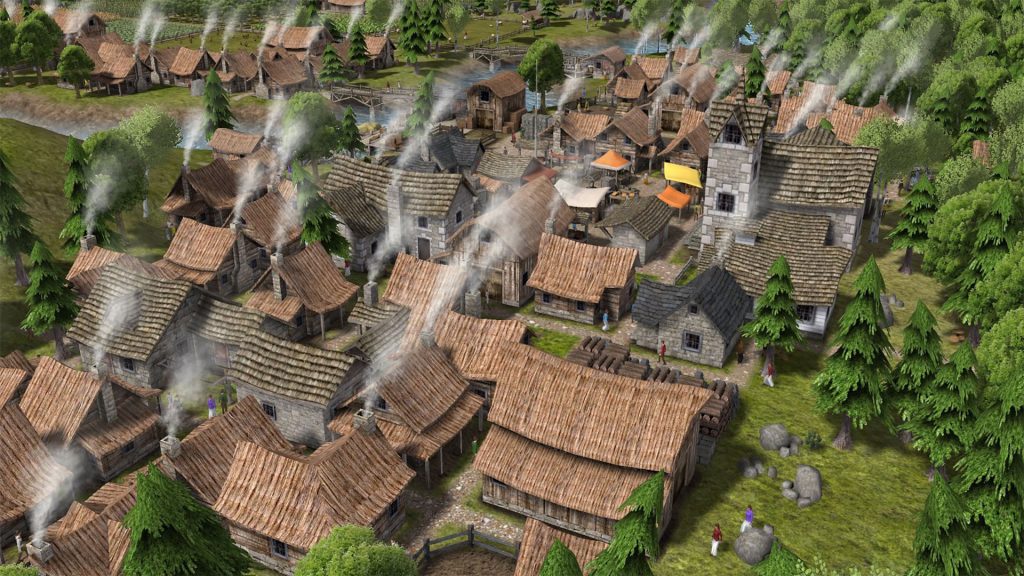
Banished – Survival Meets Settlement
Banished strips away the skyscrapers and subways. Here, you’re not building a city—you’re ensuring survival. Developed by solo dev Luke Hodorowicz, this indie gem focuses on pre-industrial settlement.
What makes it unique: - No combat, no magic. Success hinges on food supply, housing, and weather. A single harsh winter can wipe out decades of progress. - Generational gameplay. Citizens age, die, and are replaced. Long-term planning isn’t optional—it’s survival. - Minimal UI, maximum immersion. There’s no overlay telling you what’s wrong. You learn by observing: empty fields, idle workers, or smokeless chimneys.
Use case: Imagine managing a 14th-century village where every apple tree and fishery matters. One misstep—like overharvesting wood—triggers a heating crisis in winter.
Drawback: The learning curve is steep. New players often watch colonies fail due to poor storage or lack of schools (which train specialists).
Yet Banished delivers a rare emotional weight. When your first stone church is completed after 50 in-game years, it feels earned.
Surviving the Aftermath – Post-Apocalyptic City Survival
From the makers of Surviving Mars, this title swaps red planets for nuclear wastelands. You’re not building a city—you’re resurrecting civilization.
Core mechanics: - Harsh environment management. Radiation, storms, and supply shortages are constant threats. - Colony personalities. Settlers have traits that affect morale and productivity. A paranoid engineer might sabotage reactors. - Modular dome shelters. Unlike open-city builders, you expand inward, designing enclosed habitats.
Workflow tip: Prioritize clean water and medical facilities before expanding population. One plague outbreak can end a run.
While it lacks the charm of pastoral builders, Aftermath excels in tension. Every decision carries weight. Do you risk scavenging a toxic zone for steel, or wait and risk starvation?
It’s not the deepest city planner, but for players who want stakes with their infrastructure, it’s compelling.
Top 5 City Building Games for PC – Quick Comparison
| Game | Best For | Difficulty | Mod Support | Unique Hook |
|---|---|---|---|---|
| Cities: Skylines | Realistic urban planning | Medium | Excellent | Traffic AI, modding |
| SimCity (2013) | Systems-based play | Medium-High | Limited | Agent simulation |
| Banished | Survival settlement | High | None | Generational survival |
| Surviving the Aftermath | Crisis management | Medium | Good | Post-apocalyptic rebuild |
| Tropico 6 | Satirical dictatorship | Medium | Moderate | Political control & humor |
Each game carves its niche. Want control? Skylines. Want emotion? Banished. Want drama? Aftermath.
Tropico 6 – Dictatorship with a Smile
You’re not a mayor. You’re El Presidente. Tropico 6 blends city building with political satire. You balance foreign relations, internal dissent, and absurd requests from your cabinet.
Why it’s different: - Political mechanics. Elections, revolutions, and propaganda matter as much as power grids. - Island archipelago design. Build across multiple islands, linking them with bridges and ferries. - Humor as gameplay. Want to fund a Hollywood parody? Or export rum to fund your army? Go ahead.
Example scenario: You’re in debt. The IMF demands austerity. You ignore them, build tourist resorts, and bribe the press. The people are happy—until the power fails. Now rebels gather.
Limitation: Economic simulation is simplified. Profit margins and supply chains aren’t deeply modeled.
But for players who want city building with personality, Tropico 6 is unmatched in tone and replay value.
Common Pitfalls in City Building Games
Even experienced players stumble. Avoid these recurring mistakes:
- Over-zoning residential. Leads to housing gluts and tax shortfalls. Let demand dictate growth.
- Ignoring traffic flow. Roads aren’t just connectors—they’re economic arteries. Use roundabouts, avoid gridlock.
- Neglecting services. One fire station can’t cover a 50,000-person city. Plan coverage zones early.
- Forgetting long-term sustainability. In Skylines, coal plants pollute. In Aftermath, resource exhaustion kills.
- Skipping backups. Autosaves fail. Manual saves before major changes are non-negotiable.
A great city isn’t built in a day. It’s preserved through foresight.
What to Look for in a Good City Building Game
Not all city builders are created equal. Use this checklist when choosing:
✅ Clear cause-and-effect mechanics – Can you trace a riot back to unemployment or pollution? ✅ Scalable challenge – Does the game grow with your skill? ✅ Save and load stability – Nothing kills immersion like corrupted saves. ✅ Active modding community – Extends playtime and fixes gaps. ✅ Intuitive UI without hand-holding – Should inform, not dictate.
A strong UI in Cities: Skylines, for example, uses color-coded overlays (traffic, pollution, noise) that let players diagnose issues at a glance.
Games that fail here—like early SimCity with opaque feedback—frustrate more than they engage.
Final Verdict: Which One Should You Play?
- New to the genre? Start with Cities: Skylines. It’s forgiving, well-documented, and deeply customizable.
- Want emotional depth? Banished offers a quiet, reflective experience.
- Love satire and control? Tropico 6 delivers both.
- Crave high-stakes survival? Surviving the Aftermath keeps tension high.
- Interested in systemic simulation? SimCity (2013) remains a cult favorite.
There’s no single “best” city builder. The right one depends on what you want from your virtual metropolis—control, consequence, creativity, or crisis.
Get Building—Strategically
The best city building games for PC don’t just entertain—they teach. About logistics, trade-offs, and the fragility of order. Whether you’re guiding a post-apocalyptic colony or ruling a tropical dictatorship, the core challenge is universal: build wisely, or fall to your own ambition.
Pick one. Start small. Save often. And remember: every great city began with a single road.
FAQ
What is the most realistic city building game for PC? Cities: Skylines is widely regarded as the most realistic due to its traffic simulation, zoning depth, and mod support.
Is Cities: Skylines better than SimCity? For most players, yes. Cities: Skylines offers larger maps, better modding, and fewer technical issues than SimCity (2013).
Can I play city building games offline? Yes. Cities: Skylines, Banished, and Tropico 6 all support full offline play. SimCity (2013) now does too, after updates.
Which city builder has the best mod support? Cities: Skylines dominates here, with over 100,000 mods on Steam Workshop.
Are city building games hard to learn? They have a learning curve, but most offer tutorials. Tropico 6 and Cities: Skylines are beginner-friendly with gradual progression.
What’s a good free city building game? There are no full-featured free titles, but Cities: Skylines often goes on deep discount. Demos are available for most major titles.
Do these games require a powerful PC? Banished and Tropico 6 run on modest systems. Cities: Skylines can struggle with large cities or heavy mod use, requiring a stronger GPU and CPU.
FAQ
What should you look for in Best City Building Games for PC That Redefine Urban Strategy? Focus on relevance, practical value, and how well the solution matches real user intent.
Is Best City Building Games for PC That Redefine Urban Strategy suitable for beginners? That depends on the workflow, but a clear step-by-step approach usually makes it easier to start.
How do you compare options around Best City Building Games for PC That Redefine Urban Strategy? Compare features, trust signals, limitations, pricing, and ease of implementation.
What mistakes should you avoid? Avoid generic choices, weak validation, and decisions based only on marketing claims.
What is the next best step? Shortlist the most relevant options, validate them quickly, and refine from real-world results.